Kujaku · Hatsukokoro · damascus
Kujaku: the peacock hidden in steel
16 July 2026
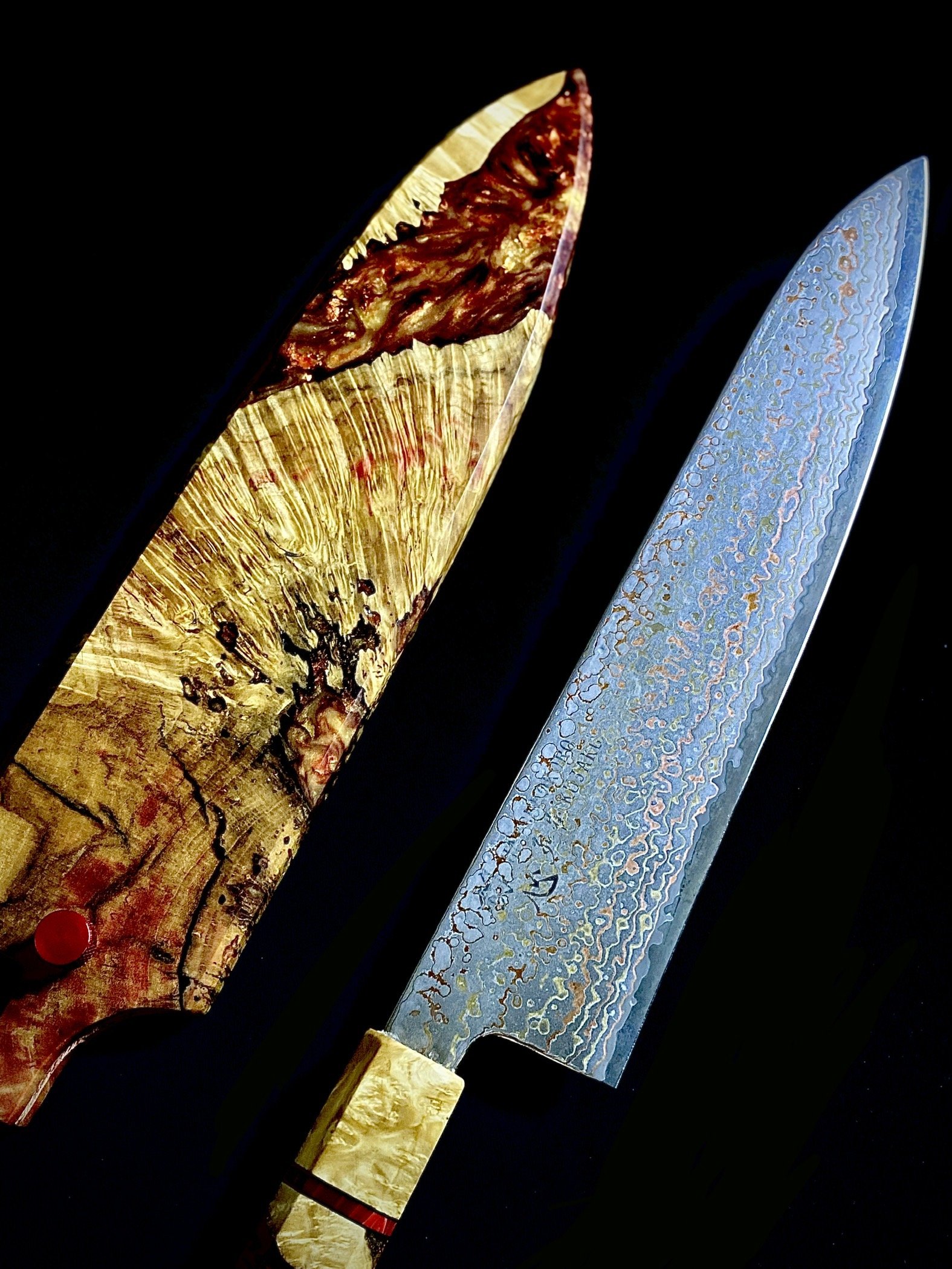
A peacock's color isn't pigment — it's structure. This blade earns its shimmer the same way: copper and brass, folded into the steel itself.
Look closely at a peacock feather and you find almost no pigment. The color is structure — microscopic layers that bend light. Hatsukokoro named this gyuto Kujaku, the peacock, and built its plumage the honest way: not with paint, but with layered metal.
Here is the part most people never guess: there is copper and brass inside this knife. Stainless steel, copper and brass are folded together into a damascus cladding, then wrapped around the cutting core — san-mai, the old three-layer construction. The warm golds and violets you see are those metals themselves, revealed when the blade is etched. Nothing is printed. Nothing can rub off.
The core that does the cutting is V-Toku2, a tungsten-alloyed carbon steel from Takefu Special Steel in Echizen, hardened to roughly 62–64 HRC — a steel in the spirit of the old blue-paper steels, prized for the fine, keen edge it takes.
And because that core is honest carbon steel, the blade is alive: it builds a patina with use, a record of every service, and asks only to be wiped dry and given an occasional film of camellia oil — the same oil Japanese sword keepers have trusted for centuries.
Hatsukokoro, of Amagasaki, Hyōgo, takes its name from shoshin wasuru bekarazu — never forget the beginner's heart. The peacock, meanwhile, forgets nothing: every fold of copper and brass stays exactly where the maker put it.
This piece rests in the Reserves, held for one Patron at a time.