japanese knife rental indonesia · rent japanese knife · Aogami #2 · kurouchi · Tosa knife maker · hammer-forged S-grind
Kyohei Shindo: Tosa's Hammer-Forged S-Grind Laser
5 August 2026
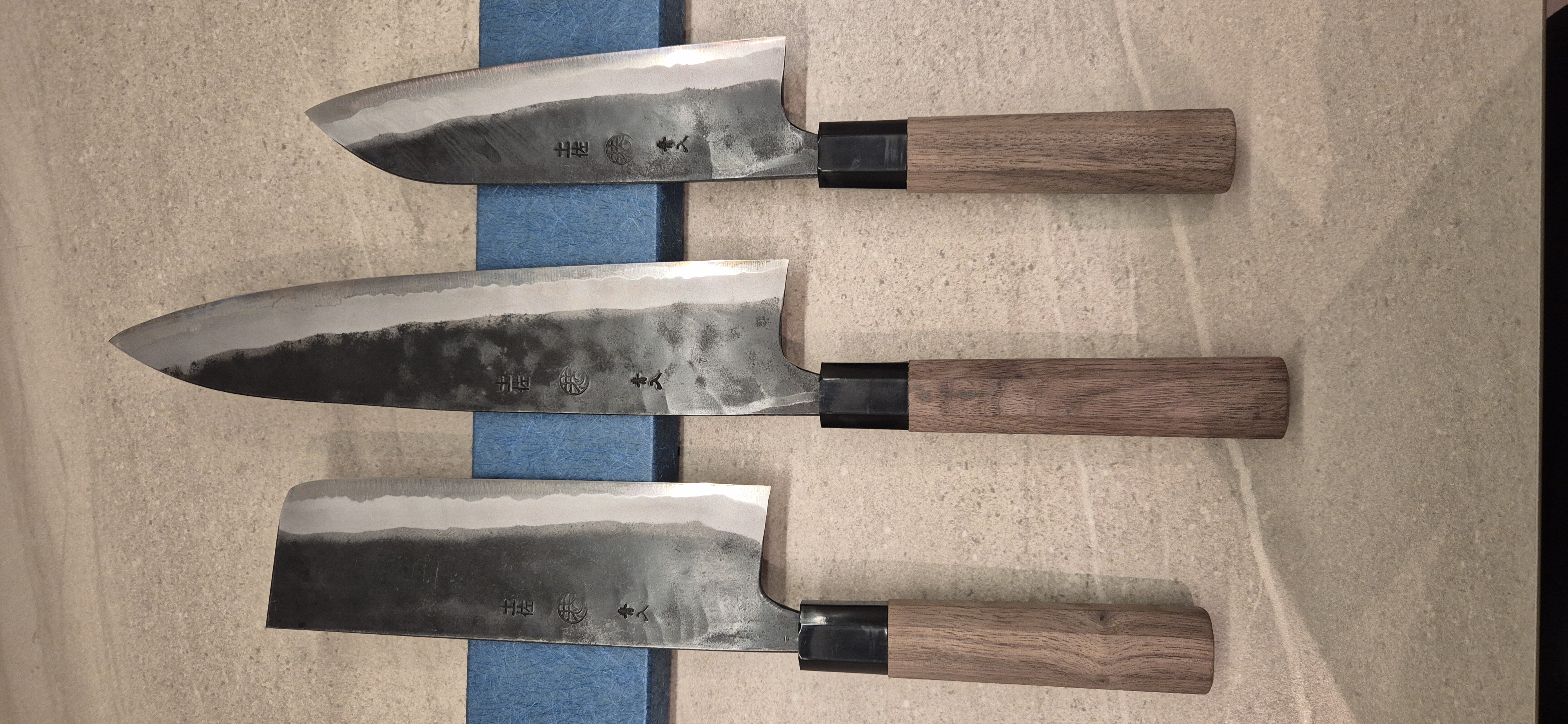
Kyohei Shindo forges Aogami #2 kurouchi in Tosa with an S-grind hammered into the steel, not ground out — the hook chefs keep talking about.
# Kyohei Shindo: Tosa's Hammer-Forged S-Grind Laser
Kyohei Shindo was born in Hokkaido in the late 1980s and did not stay there. He moved south to Tosa, in Kōchi — a region with its own long single-bevel and outdoor-blade tradition — and by his early 30s had done something most smiths spend a decade working toward before they attempt it: he opened his own forge. Kyohei Forging started in Tosa city in 2020. It is a young operation by the standards of a craft where houses are often named for grandfathers, and that youth shows up in the knives — this is a maker still actively shaping what his signature looks like, blade by blade.
The warikomi build
Shindo's core line is warikomi construction in Aogami #2: a carbon steel core sandwiched into an iron cladding, then finished in Tosa-lacquered kurouchi — the dark, semi-matte forged skin left mostly as it comes off the anvil rather than polished away. It is a traditional Tosa finish worn by a knife built with a distinctly untraditional grind.
The geometry is the part chefs notice first. Retailer copy describes a thick spine at the pinch that tapers aggressively down the blade, paired with an edge left extremely thin behind the bevel — descriptions that use the phrase "absolute laser" without much hedging. Thin-behind-the-edge geometry cuts beautifully. It also usually comes with a tradeoff: food sticks to a blade that thin, because there is no belly of steel to break suction as a slice falls away.
The hook: an S-grind forged, not ground
This is where Shindo's knives depart from most laser-thin blades on the market. Retailers describe his geometry as a hammered-in mild S-grind — a shallow concavity along the blade face, put there at the anvil during forging rather than removed afterward on a belt grinder. Most makers who want that concave relief achieve it by grinding steel away after the blade is already shaped. Shindo is credited with forging the concavity into the blade as part of the hammer work itself.
The practical result, per retailer and community descriptions, is a knife that keeps the food-release benefit an S-grind is known for — air pockets that break suction on wet ingredients like cucumber or sweet potato — without giving up the thinness that makes the edge cut so cleanly. It is a hammer-forged answer to a problem grinders usually solve, and it is the detail that keeps coming up whenever his name does.
What "laser" costs and pays
Shindo's knives have become something close to a community favorite on performance-per-dollar grounds, sitting roughly in the US$140–250 range for nakiri, bunka, and santoku profiles — genuinely forged, genuinely thin, genuinely food-releasing, at a price that undercuts a lot of the competition making similar claims. A steel line sold under the name "Enjin," reported at retailers including Chef Knives To Go, is understood to run SRK8 rather than Aogami #2 — worth treating as retailer-sourced detail rather than confirmed by the smith directly, since it is a separate steel from his signature warikomi work. Stockists carrying Shindo's knives include Tokushu Knife, Chef Knives To Go, Knifewear, Seisuke, and Mikazuki.
A candid note
A blade this thin behind the edge is not a knife for careless storage or for someone who wants to skip stone work. Thin geometry chips faster on bone or frozen contact than a thicker European-style edge, and the iron-clad kurouchi finish needs the same rust discipline any carbon-core knife demands after service. What you get in exchange is genuinely exceptional cutting feel — this is a trade a working chef makes on purpose, not one to fall into by accident.
A knife built around a hammer-forged idea this specific deserves to be felt on your own board before it becomes a purchase. Hagane Reserves holds Aogami #2 and other carbon-core Japanese work for exactly that — a Reserve period in one Patron's hands, no pressure to decide before you have actually cut with it.
Hagane Reserves is a premium **Japanese knife rental** in Indonesia — hammer-forged Aogami #2 work held for one Patron at a time. See what is currently in the Reserves.