Myojin Naohito · Naohito Myojin · togishi · Tosa knife sharpener · Japanese knife grinding
Myojin Naohito: The Togishi Who Finishes Blades in Tosa
23 July 2026
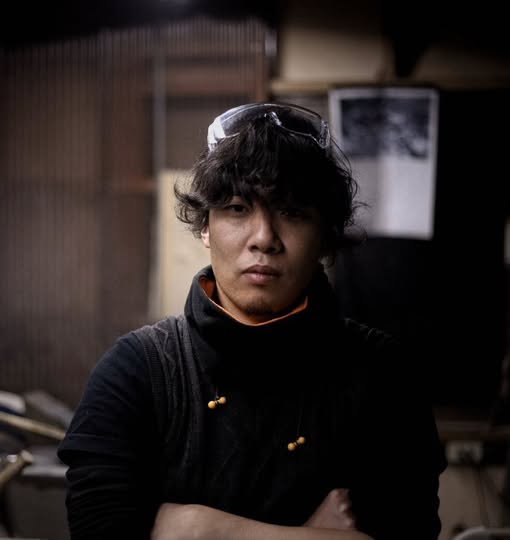
Myojin Naohito is a Tosa-based togishi known for precision thin grinds, the unsung second hand behind some of Japan's most respected blades.
Two Crafts, One Blade
A Japanese kitchen knife is rarely the work of one hand. A smith forges the steel and sets its hardness; a togishi — a sharpener and finisher — grinds the blade to its final geometry and puts on the edge that actually cuts. Both crafts take years to learn properly, and the second one is far less visible. Myojin Naohito has spent his career making sure it isn't invisible.
Born Into the Family Business
Myojin works out of Myojinriki Seisakusho, a Tosa (Kochi, Shikoku) workshop whose core trade — sharpening and finishing blades forged elsewhere — has been the family business for generations. He grew up around the whetstones, helping out as a boy, and formally began working as a sharpener at eighteen, apprenticing under his father, Tateo Myojin. It is a lineage trade in the truest sense: skill handed down at the stone, not in a classroom.
He later co-founded Tetsujin Hamono with blacksmith Toru Tamura, pairing Tamura's forging with his own finishing — a partnership that reads, in the shape of every blade it produces, as two disciplines meeting in the middle.
The Precision Thin Grind
What Myojin is known for is thinness with control: a grind fine enough to reward a careful cook without folding or chipping under normal use. Knife-literate collectors and retailers who carry his sharpening informally credit that signature — sometimes called the "Myojin grind" among enthusiasts — to a slightly rounded profile behind the edge, thinned with patience rather than speed. It is a look and a feel, not a marketing term, and it takes a trained hand to reproduce consistently, blade after blade.
His reputation extends well beyond one workshop. He has been trusted to finish work for some of Sakai's most well-regarded smiths, including sharpening duties on Konosuke's flagship lines — the kind of assignment that only goes to a togishi other craftsmen already respect.
A Craft Learned at the Stone, Not the Anvil
Sharpening and finishing is easy to underestimate because the tools look simple: whetstones of increasing fineness, water, patience. What separates a trained togishi from an amateur with a stone is knowing exactly how much steel to remove, and where, so the blade's geometry does what the smith intended and no more. Grind too aggressively near the edge and you weaken it; leave too much steel behind the edge and even a perfectly forged blade will feel like it's pushing through food rather than slicing it. Myojin's decades at the stone are, in effect, decades of learning to read a blade's cross-section by feel.
Why the Workshop Model Still Works
Myojinriki Seisakusho's core trade has always been finishing blades forged by other workshops, which puts Myojin in an unusual position: he has sharpened for more different smiths, in more different styles of steel, than almost any smith has forged for. That range is exactly what a togishi needs. A grind that suits one steel's grain structure can be wrong for another, and a career built on variety, rather than a single house style, is part of what makes his finishing so widely trusted.
The Unsung Second Hand
Ask most people what makes a Japanese knife exceptional and they will describe the steel, the hamon, the smith's name on the tang. Fewer will mention that the same blank of steel, forged identically, can perform completely differently depending on who grinds it. A rushed or uneven grind will dull a great forging's promise; a patient one — thin where it needs to be thin, supported where it needs support — lets the steel do everything it was heat-treated to do.
That is the case for naming the togishi at all. Myojin Naohito's name belongs next to the smith's, not beneath it, because the edge a Patron actually feels against the cutting board is his work as much as anyone's.
Held in the Reserves
A piece finished by Myojin Naohito carries two signatures, forged and ground, and both are honoured when it enters the Reserves. Reserve one for a Reserve period and feel, directly, what a togishi's patience adds to a smith's steel. See the collection at Hagane Reserves.