single bevel japanese knife · yanagiba knife · usuba knife · deba knife · what is urasuki · japanese knife rental indonesia · rent japanese knife
Single-Bevel Japanese Knives Explained for Chefs
3 August 2026
Yanagiba, usuba, deba, mukimono — how single-bevel geometry and urasuki deliver the precision of washoku, and the Kanto vs Kansai split behind it.
# Single-Bevel Japanese Knives Explained for Chefs
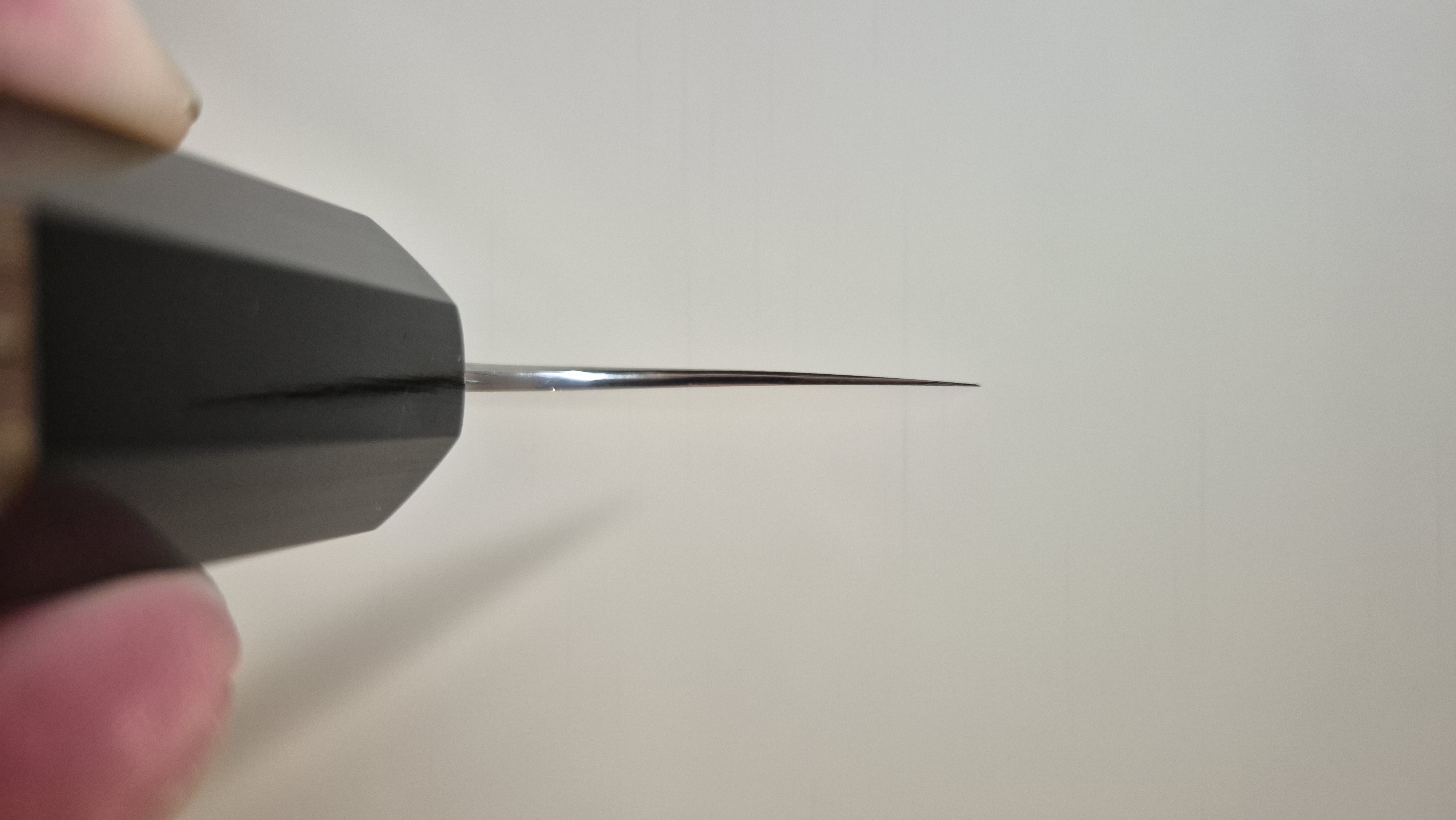
Where double-bevel knives are the generalists, single-bevel knives are the specialists — and the specialty is precision. A single-bevel blade is ground on one face only, with a concave hollow called urasuki cut into the back. That hollow is not decoration: it reduces the contact area between blade and food, cutting drag and giving a cleaner, flatter release than any double-bevel edge can match. This geometry is the mechanical basis of washoku precision — the standard sushi, sashimi, and kaiseki kitchens are built around.
Yanagiba and takobiki — the sashimi standard
The yanagiba, 240–330mm, is the willow-leaf slicer that defines Japanese sashimi work: a single long pull through a fillet, not a sawing motion, because the flat single-bevel face and urasuki let the edge glide rather than tear. It is the Kansai (Osaka/Kyoto) standard. The takobiki is its Kanto (Edo/Tokyo) counterpart — same job, flatter profile, and a distinctive square tip instead of the yanagiba's pointed one. Neither is better; they're regional dialects of the same slicing language, and which one a chef trained on often comes down to where they trained. We compare the yanagiba against its double-bevel cousin, the sujihiki, in our companion piece on double-bevel Japanese knives.
Usuba — the vegetable specialist's vegetable knife
The usuba is the professional single-bevel vegetable knife, and it carries the same Kanto/Kansai split as the sashimi knives. The Edo, or higashi-gata, usuba has a square nose typical of Kanto craftsmanship; the kamagata usuba, from Kansai, has a rounded sickle-shaped spine. It is the direct professional counterpart to the double-bevel nakiri, and the reason it exists at all comes down to katsuramuki — the rotary technique of peeling a daikon cylinder into one continuous, paper-thin, translucent sheet. A tall, flat single-bevel edge with urasuki lets the flat face register cleanly against the daikon while the thumbs advance it; a double-bevel wedge would steer off-line. Apprentices in a washoku kitchen are said to practice katsuramuki daily on daikon, judged on sheet evenness and translucency, often for years before they're trusted at the fish station — a piece of kitchen lore worth repeating with the hedge it deserves.
Deba, mukimono, and the boning line
The deba is the thick, heavy single-bevel knife built for breaking down whole fish — enough spine to get through bone, enough belly to portion cleanly after. It comes in a family of sizes: ko-deba for small fish and detail work, ai-deba as the mid-weight standard, and mioroshi deba as a longer, thinner hybrid for filleting speed. Mukimono is the small, square-nosed cousin used for peeling and garnish work — decorative cutting where the urasuki again does the job of a clean, non-tearing release.
Kensaki kiritsuke — the head chef's knife, by reputation
The kensaki, or true single-bevel kiritsuke, is an angled-tip hybrid built to do both usuba and yanagiba work from one blade. Tradition holds it as the head chef's knife — a piece of status lore worth naming honestly rather than treating as settled fact. We go further into kiritsuke lore, including its double-bevel gyuto cousin, in our piece on unusual Japanese knife shapes.
Kanto vs Kansai — a hedge, not a rulebook
Across the single-bevel world, a rough geographic pattern holds: Tokyo (Kanto) tends toward square, blunt profiles — takobiki, Edo usuba — while Osaka and Kyoto (Kansai) favor pointed or rounded tips — yanagiba, kamagata usuba. Treat this as tradition rather than law. Regional houses trained under different lineages, and a chef's preference for one profile over another is as often personal as regional.
The honest note
Single-bevel knives reward technique more than they reward a heavy hand. Sharpening one correctly means maintaining the flat back and the urasuki hollow together, not just the bevel — a skill that takes longer to learn than double-bevel stone work, and one a busy kitchen should budget real time for rather than treat as an afterthought.
Hagane Reserves carries pieces suited to this world, including the Satoshi Nakagawa x Naohito Myojin Aogami #1 santoku with an amboyna handle by Byan Hoja — a double-bevel piece from smiths whose single-bevel lineage runs deep in the same tradition. Any piece can be reserved for a Reserve period, held for one Patron at a time.
Hagane Reserves is a premium **Japanese knife rental** in Indonesia — single-bevel yanagiba, usuba, and deba held for one Patron at a time. See what is currently in the Reserves.