sobakiri knife · unagisaki eel knife · maguro bocho · hamokiri · suikakiri watermelon knife · japanese knife rental indonesia · rent japanese knife
Specialty Japanese Knives Every Chef Should Know
3 August 2026
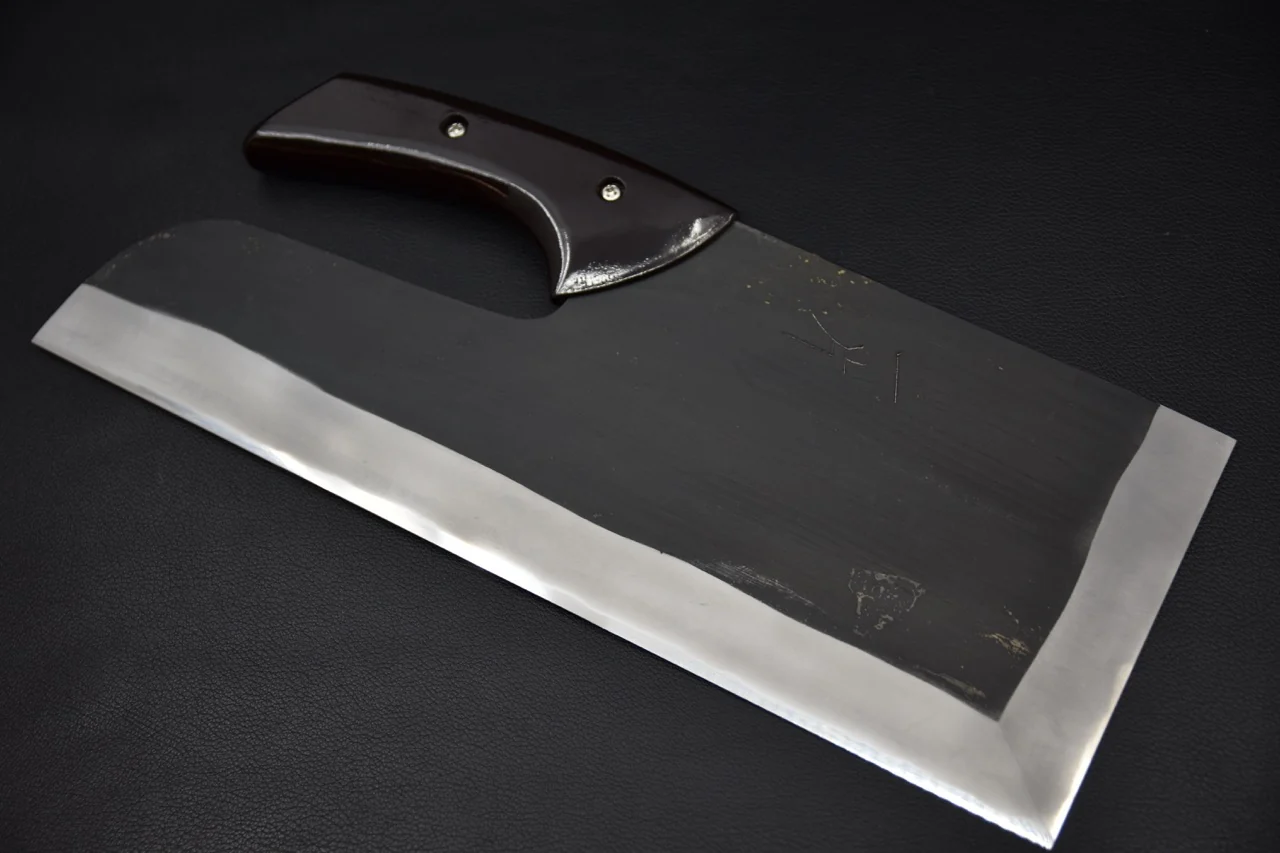
Sobakiri, unagisaki, maguro bocho, hamokiri, suikakiri — the wonderful, hyper-specific Japanese knives built for one job and one job only.
# Specialty Japanese Knives Every Chef Should Know
Somewhere past the gyuto and the yanagiba, the Japanese knife world stops generalizing entirely and starts building tools for exactly one task. These are the wonderful oddities — knives that exist because a single regional dish or a single ingredient demanded its own blade, and nobody ever tried to make them do double duty. For a chef who has already worked through the double-bevel and single-bevel fundamentals, this is where the craft gets genuinely delightful.
Sobakiri and udon kiri — the noodle guillotine
The sobakiri, also called menkiri, is enormous by any kitchen-knife standard: a rectangular blade 300–360mm tall, weighing anywhere from 750g to over a kilogram. Its job is a single straight push cut through a full folded sheet of soba dough, edge parallel to the board, no rocking, no sawing — one motion, one perfectly even row of noodles. It grew out of Edo-era soba-shop culture, where speed and consistency across hundreds of covers a day mattered more than finesse in any one cut. Udon kiri belongs to the same family, built for the thicker, sturdier dough udon demands. Handling one for the first time is a genuine surprise for a chef used to gyuto weight — this is a tool built entirely around its own straight-drop mechanics.
Unagisaki — the eel knife with a regional identity crisis
Few Japanese knives carry as much regional variation as the unagisaki, the eel-preparation knife, and the differences aren't cosmetic — they reflect genuinely different techniques. The Edo-saki, from Tokyo, has a stubby handle and a tanto-style tip, and it opens the eel from the back. Regional folklore ties that back-opening method to samurai-era Edo, where cutting from the belly was said to echo seppuku and was avoided for the trade — a story worth telling with the hedge it deserves rather than as settled history. The Kyo-saki, from Kyoto, is taller in the blade with a spine that doubles as a small pin-hammer for stunning the eel before cutting. The Osaka-saki is handleless and rectangular, and opens the eel from the belly rather than the back. Nagoya and Kyushu carry their own regional variants too. It's a rare case of one ingredient producing four or five genuinely distinct blade philosophies within a single country.
Maguro bocho — the tuna sword
At the far end of scale sits the maguro bocho, built for breaking down whole tuna at market — blades running past a meter long, occasionally requiring two people to operate safely on a single fish. It is less a kitchen knife than a piece of working theater, and market tuna-breakdown demonstrations built around it have become spectacle in their own right. Few kitchens will ever own one, but understanding what it's for explains why the rest of the Japanese knife world feels so precisely scaled by comparison — this is the size a blade grows to when the ingredient genuinely demands it.
Hamokiri and hamo no honekiri — patience made into a knife
The hamokiri is a heavy knife built for pike conger, or hamo, a fish that shows up throughout Kyoto and Osaka's summer cuisine and carries an enormous number of fine bones through its flesh. The specific technique it enables, hamo no honekiri, means cutting hundreds of fine slits through those bones in a single fillet without ever breaking through the skin — a task that rewards patience and a very particular kind of control more than raw speed. It's one of the clearest examples in Japanese cuisine of a knife shape existing purely to solve one ingredient's specific anatomical problem.
Suikakiri — the watermelon knife
Less dramatic in its backstory but genuinely useful is the suikakiri, a long, thin blade built specifically to halve a watermelon cleanly in one draw rather than crushing through it with a shorter knife. It's a real catalog item across specialty retailers, not a novelty invented for this article, and it's a good reminder that Japanese knife culture applies the same one-job-one-blade logic to a summer fruit as it does to sashimi.
The honest note
Most of these knives don't belong in a general rotation, and that's the point — a sobakiri or a maguro bocho earns its keep only in a kitchen actually built around that dish. Buying or renting one for occasional novelty use is a fair choice, but it's worth being honest with yourself about how often it will actually leave the drawer.
For the fundamentals these specialty knives sit alongside, see our pieces on double-bevel and single-bevel Japanese knives, including the usuba and its role in katsuramuki work.
Hagane Reserves is a premium **Japanese knife rental** in Indonesia — specialty pieces held for one Patron at a time for the Reserve period that actually needs them. See what is currently in the Reserves.