Hatsukokoro
Amagasaki, Hyōgo (curator house — forge undisclosed)
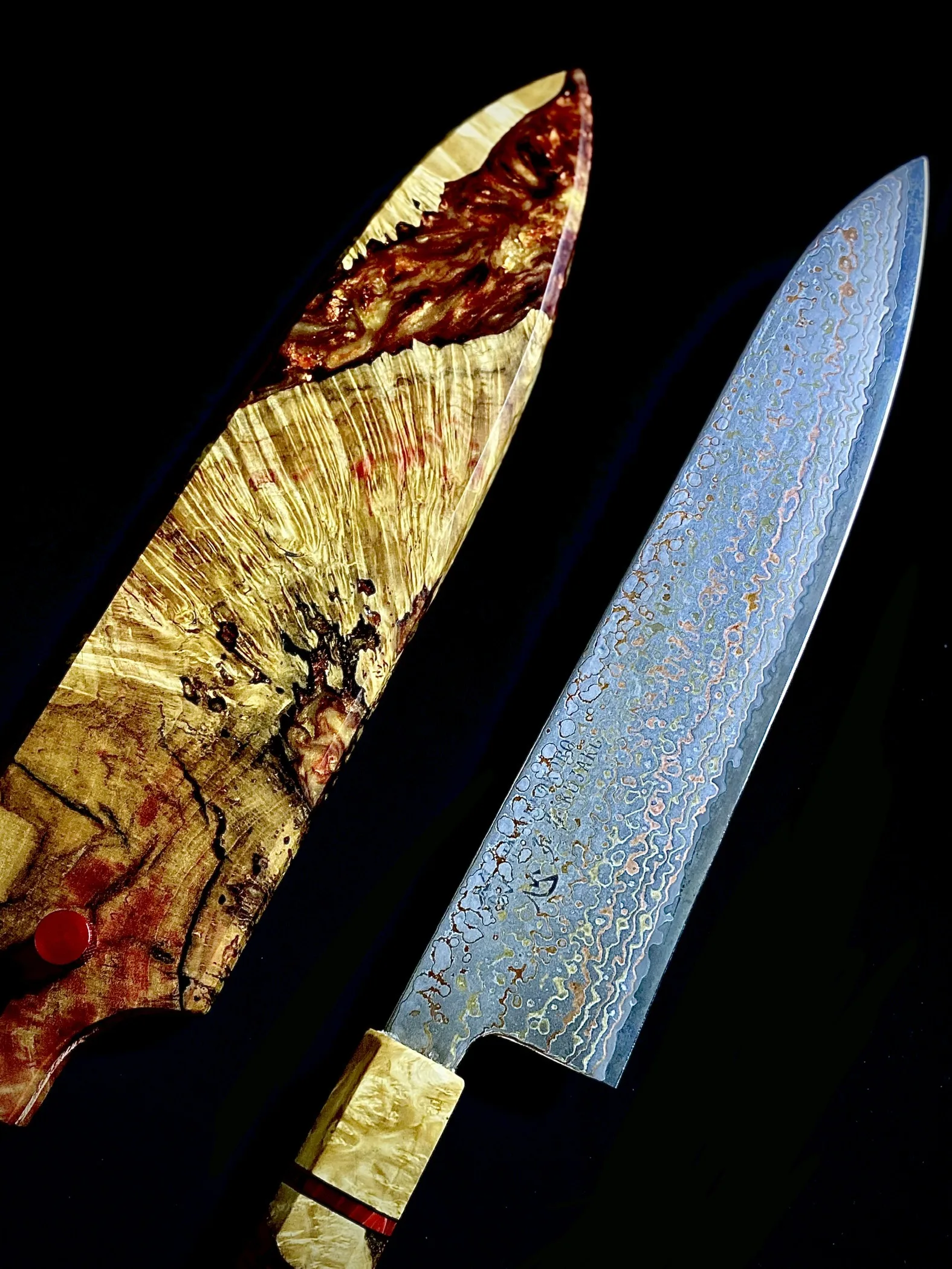
Hatsukokoro, Kujaku, V-Toku2, Gyuto, 240mm, LetsHandleThis Custom Amboyna Burl Handle + Saya
Hatsukokoro's Kujaku takes its name from the peacock — and earns it in metal. Stainless steel, copper and brass are folded into an etched rainbow damascus around a V-Toku2 carbon core, a blade that shimmers like plumage and cuts like the old steels. A piece of the Reserves, held for one Patron at a time.
The makers, and the making
Brand — Hatsukokoro, Amagasaki, Hyōgo. A curator brand, not a single forge: each line is commissioned from Japanese workshops chosen for the task. The workshop behind Kujaku is undisclosed.
Steel — V-Toku2 carbon steel by Takefu Special Steel, Echizen — a tungsten-alloyed steel in the spirit of Blue #2, prized for the keen, fine edge it takes; hardened to roughly 62–64 HRC.
Construction — San-mai: the carbon core sheathed in etched damascus of stainless steel, copper and brass — the layered metals give the "peacock" shimmer.
Character — The core is reactive carbon steel: it will build a patina with use, and it asks to be wiped dry after service, with an occasional film of camellia oil. A living blade, not a maintenance-free one.
Edge — Double bevel.
Profile — Gyuto, 240 mm class.
The maker forged it. You command the table.
- Reserve period
- Minimum 2 days
- Rental rate
- Rp 200.000
- per day
- Security deposit
- Rp 9.900.000
- Fully refundable when the piece returns in the agreed condition
- How the deposit comes back
From the forge
Hatsukokoro takes its name from an old admonition of the Japanese arts: shoshin wasuru bekarazu — never forget the beginner's heart. The brand, founded in Amagasaki, Hyōgo, works the old way in reverse: rather than one forge making everything, it seeks out workshops across Japan and commissions each line from the hands best suited to it. The name goes only on blades that keep the intention it was named for.
Kujaku means peacock, and in Japan the peacock is more than ornament. In esoteric Buddhism, Kujaku Myōō — the Peacock Wisdom King — rides the bird that eats venomous snakes and takes no harm, and so became the deity who devours poison and turns it into protection. Alone among the fierce Wisdom Kings, Kujaku Myōō wears a face of mercy. It is a fitting patron for a kitchen blade: an instrument that takes the raw and makes it nourishing.
The blade wears the name openly. Around a carbon-steel core, the workshop folds stainless steel, copper and brass into a damascus that is then etched until the layered metals surface in bands of silver, rose and gold — plumage in cross-section, shifting as the blade turns in the light. This is not a coating; the colour is the metal itself, and it will still be there after years of service.
At the core runs V-Toku2 from Takefu Special Steel in Echizen — a tungsten-alloyed carbon steel in the spirit of the classic Blue #2, hardened to roughly 62–64 HRC. It takes the keen, fine-grained edge that carbon steels are loved for, the kind that falls through an onion rather than pushing through it. And like all true carbon steels, it is alive: the core will darken into a patina that records every service, and it asks a small ritual in return — wiped dry after the last cut, an occasional film of camellia oil before it rests. That ritual is not a flaw. It is the same courtesy Japanese kitchens have paid their blades for centuries.
A 240 mm gyuto is the chef's sword — long enough to draw through a roast or a whole cabbage in one motion, agile enough for the board work between. This one does it dressed in peacock feathers. The piece is held for one Patron at a time; when the Reserve period ends it returns to the Reserves, inspected, oiled and readied for the next table it will command.
Held for one Patron at a time, for the length of a Reserve period.